
In this story
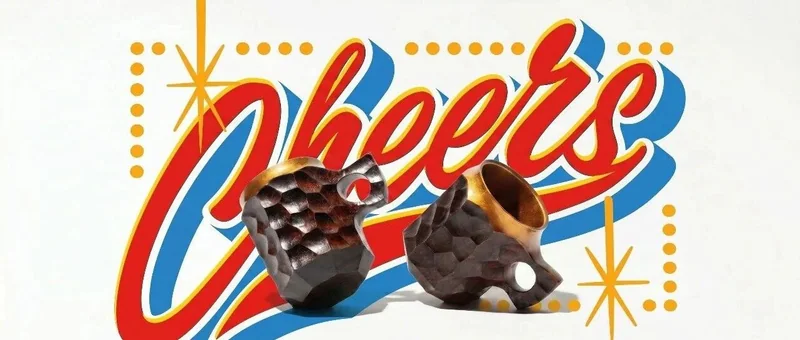
CHEERS! A sensory proposal about drinking
↑ Back to contents
If a tent is a movable home at camp, a drink is the small flame that brings it to life.
From the first steam of a morning pour-over to a cold, sweating can of beer beside a late-night fire, drinking is one of outdoor life’s most immediate sensory transitions. It involves the liquid, the vessel holding it and the pocket of time that seems to stand still.
Camp somewhere,
Cheers somewhere.
Events, dates, quantities and prices below retain the context of the original publication. They are presented here as an editorial archive.
CSW’s CHEERS! project begins with people and objects devoted to the art of drinking. The original announcement also looked ahead to Tokyo’s Field Style outdoor exhibition and Shanghai’s OIDE, where CSW planned limited-edition drinking vessels with craft studios, alongside a series of explorations of drinking culture.
Beyond equipment, CSW is interested in time, craft and an uncompromising approach to life poured into a cup.

If CHEERS! needed an object to begin with, it would probably be JINCUP.
It is neither complicated nor extraordinarily expensive, and function is not its loudest message. Yet it repeatedly appears beside people who understand it. It is an object and a reminder: of time, of touch and of how a cup can accompany a slower life.
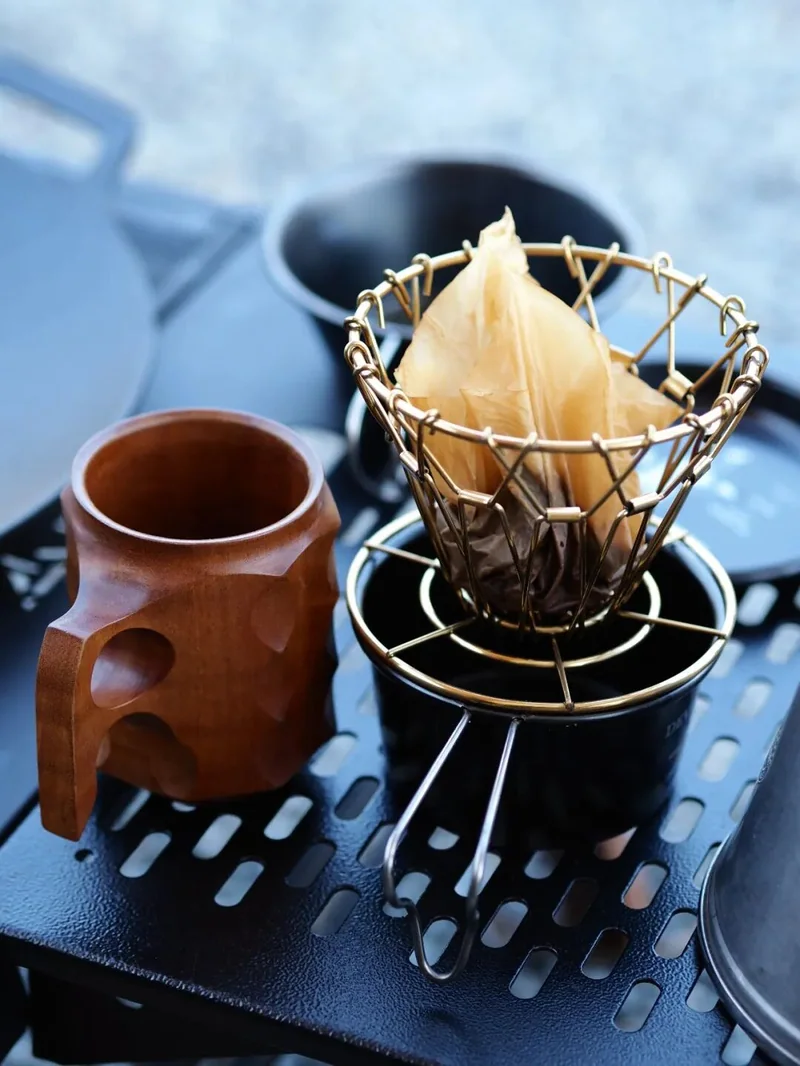
That is why we wanted to discuss outdoor living through drinking.
Akihiro Woodworks: time in Kagoshima
↑ Back to contentsSpend enough time around design-conscious camping and sooner or later you will encounter Jincup.
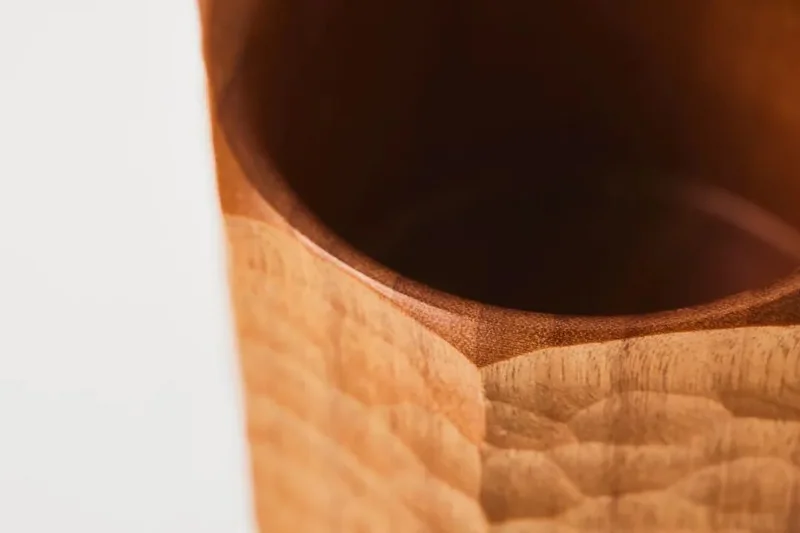
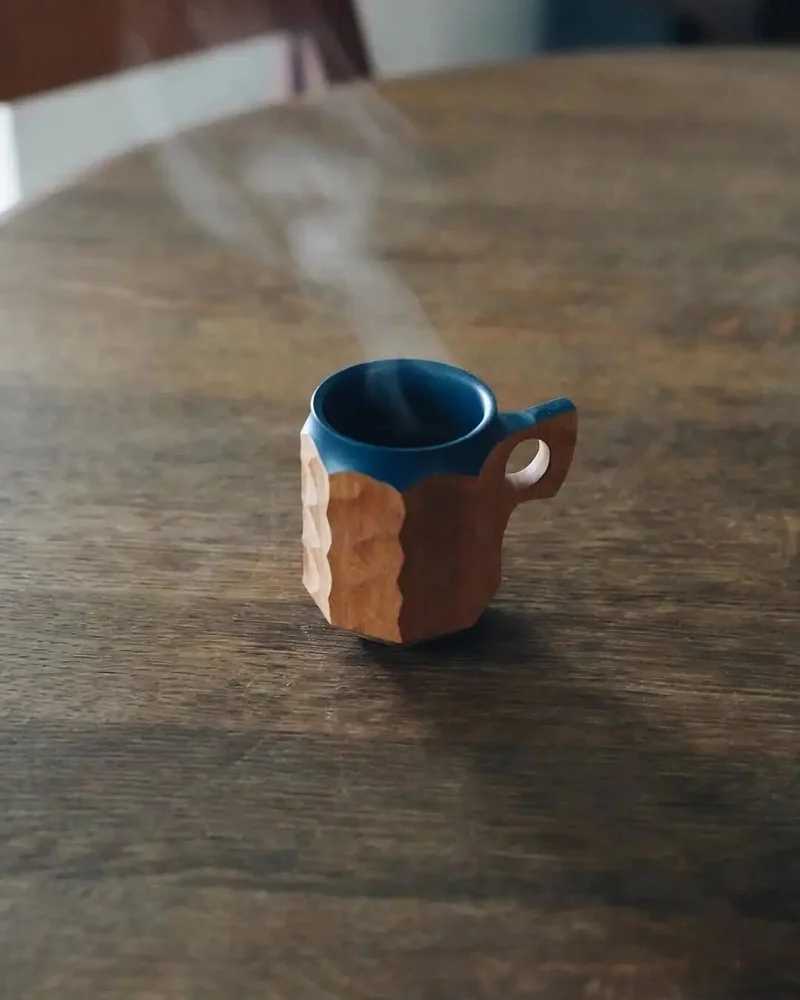
On a cool morning, when metal or enamel still feels sharply cold, the cup is warm and light in the hand. It does not conform to the smoothness of industrial production: cut facets remain, alongside a crisp triangular handle. It may not occupy a major brand’s shop window, but it finds its way into considered everyday lives.
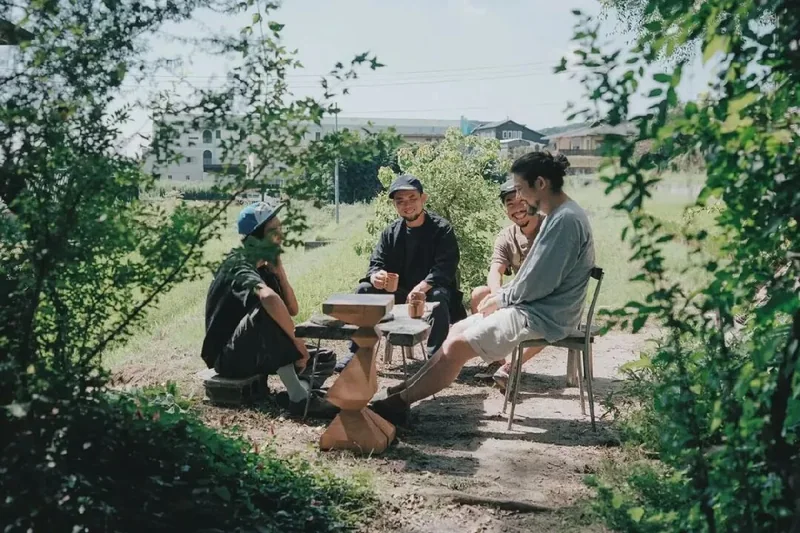
Jincup comes from Akihiro Woodworks, a three-person woodworking group in Kagoshima. Its maker, Jin Akihiro, describes himself as an alien dancing wildly across the canvas of the market. The cup is his way of speaking to the world.
A father’s name and a demanding family rule
↑ Back to contents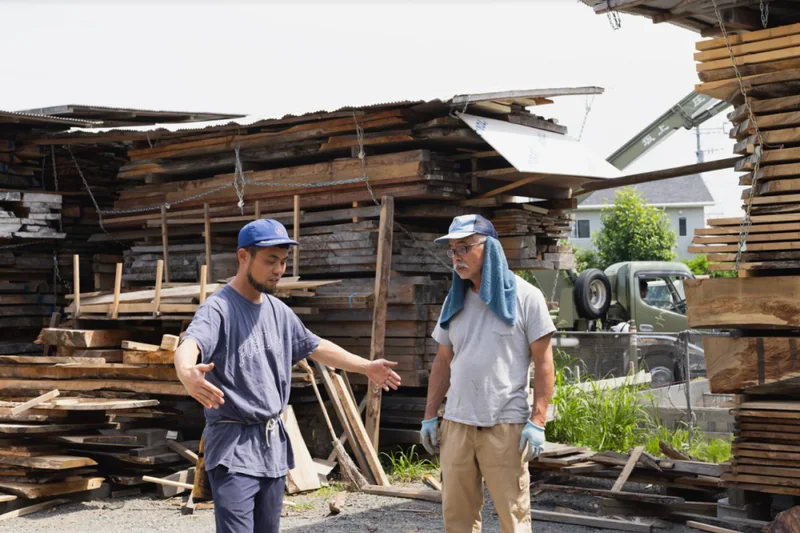
In 1985, Jin’s father, Noboru Akihiro, began making independently beside the family yard. He set an uncompromising rule: no subcontracted work, only commissions received directly and face to face.
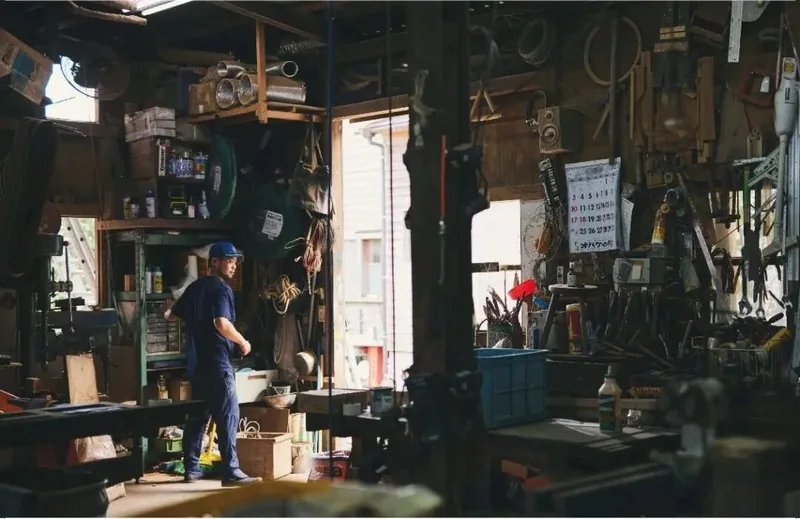
From choosing timber and measuring to presenting a proposal, the family had to take responsibility for every stage. Jin and his younger brother grew up among shavings and the smell of wood, watching their father turn down easy orders for the sake of quality. Jin came to believe that an object loses its spirit if it cannot establish direct trust between maker and user.
A birthday gift and a five-year relationship with tabunoki
↑ Back to contentsJincup did not begin with an ambitious business plan.
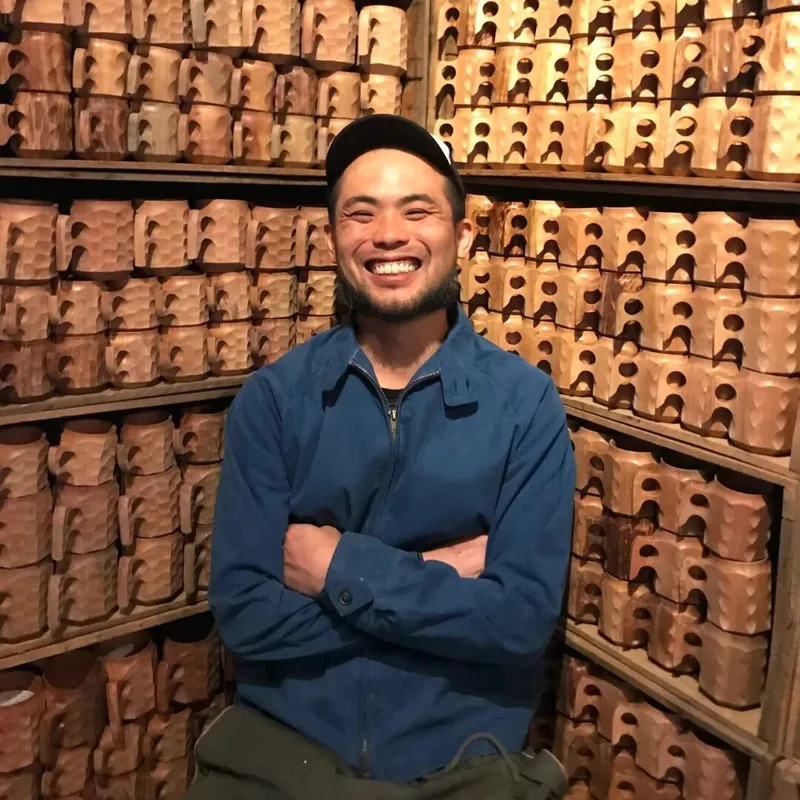
In 2007, Jin was still learning beside his father. For his mother’s fiftieth birthday, he carved the first prototype from tabunoki offcuts left over from furniture making, working from an indistinct shape in his mind. Locally, the wood was often inexpensive fuel for smoking bonito. Jin saw its toughness and the sharp surfaces it could hold.
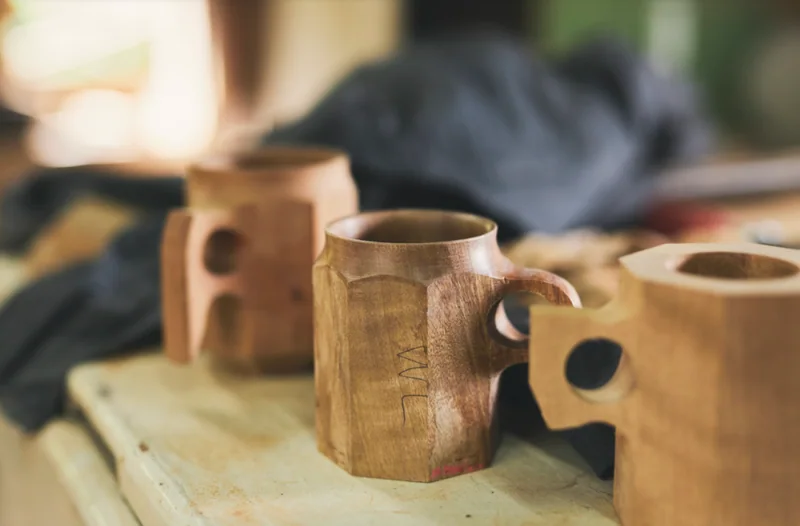
Each wooden Jincup begins with timber naturally air-dried for three to five years before carving. The cup held today may have begun its journey five years earlier.
From wood to “Neo Woodworking”
↑ Back to contentsAs Jincup gained attention internationally, production became difficult. To conserve forest resources and address chronic tendon-sheath inflammation caused by intensive carving, Jin looked beyond entirely hand-carved production.
He worked with his high-school friend Yusuke Kido, founder of ONE KILN, to create a ceramic Jincup in Hasami using drain casting. It was more than reproduction: the way slip adhered introduced variation, preserving the idea that every cup would be different.
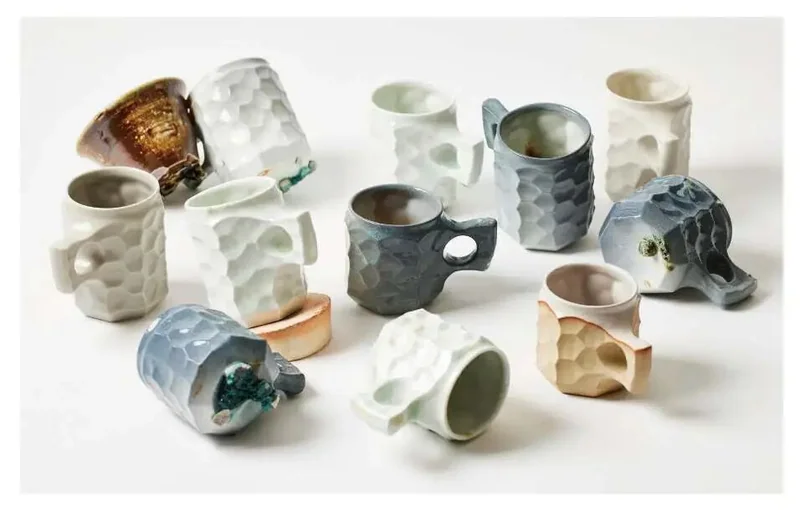
A deeper shift followed an afternoon realisation: ash glaze in traditional ceramics is, at heart, what remains of wood. Jin developed a natural oak-ash glaze, burning the hardwood and firing its ash at 1,200°C until it became a glass-like surface around the clay.
He called this “Neo Woodworking.” Wood becomes ash, ash becomes glaze, glaze surrounds clay, and the finished vessel again holds something from the forest. He had not left wood behind; he had found another form for it.
Jincup GOLDEN: an accident transformed
↑ Back to contents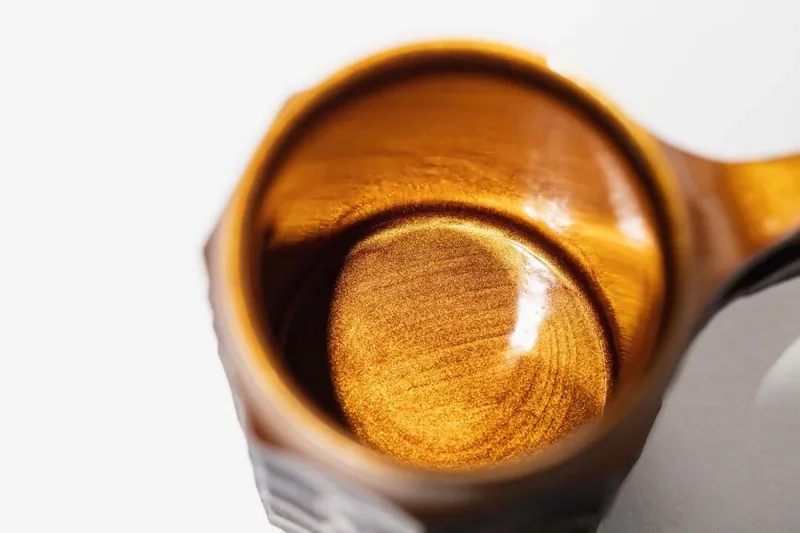
In 2021, a roof leak damaged the workshop. Iron in the rainwater reacted with the lacquer, leaving black marks on finished cups. Jin refused messages offering to buy the damaged pieces: selling them through an appeal to sympathy, he felt, would disrespect the craft.
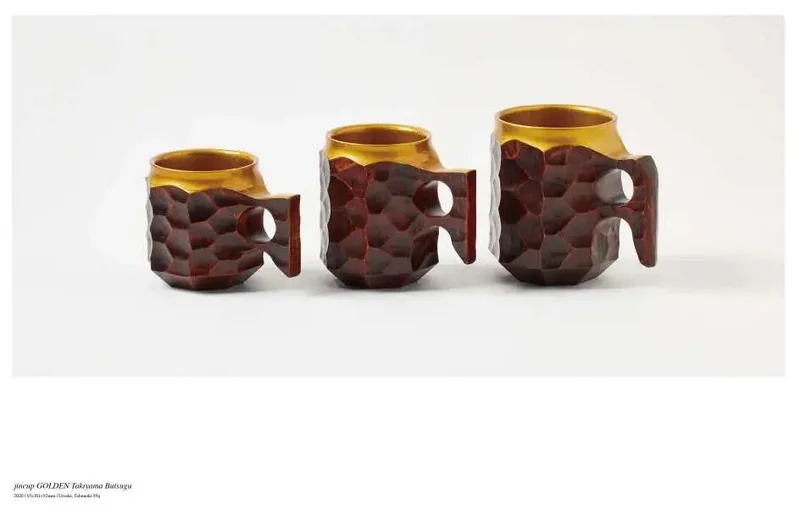
Seeking a way forward, he and lacquer artisan Takiyama turned to the controversial material Hybrid Urushi. In a conservative craft tradition, the choice was provocative. Where traditional raw lacquer offered restraint, this newer material, described in the original account as using nanotechnology, produced a metallic brilliance and high hardness, with dishwasher use among its stated practical qualities.
That embrace of contemporary practicality helped make Jincup GOLDEN a coveted piece at an Isetan Shinjuku exhibition, where access was allocated by lottery.
A future entrusted to the user
↑ Back to contentsAt the time of the article, Jincup had entered the Noguchi Museum in New York. Its inclusion was explained through its affinity with Isamu Noguchi’s idea of functional sculpture.
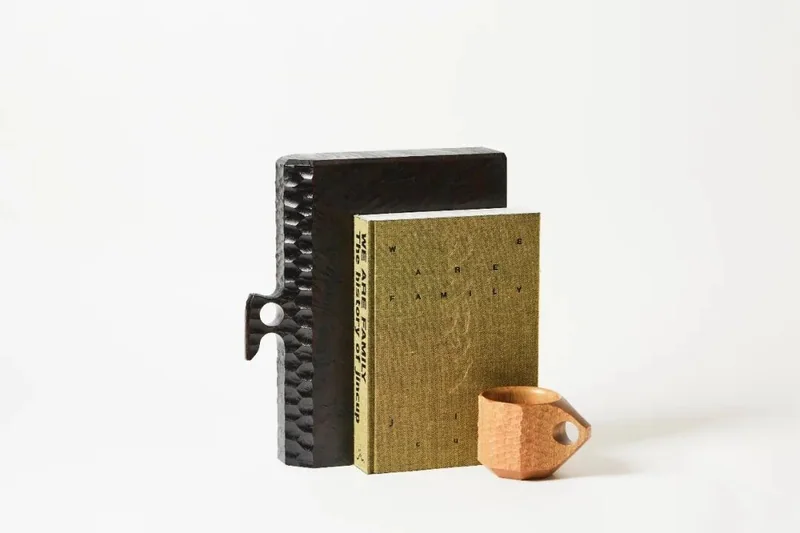
Even with that recognition, Jin kept his humour. For the family-history publication WE ARE FAMILY in 2025, he designed a wooden book sleeve called BOOKSUITS. Put it on a shelf and Jincup’s handle projects from the side. The metaphor is that the words in a book are input, while the life lived beside it is the real output.
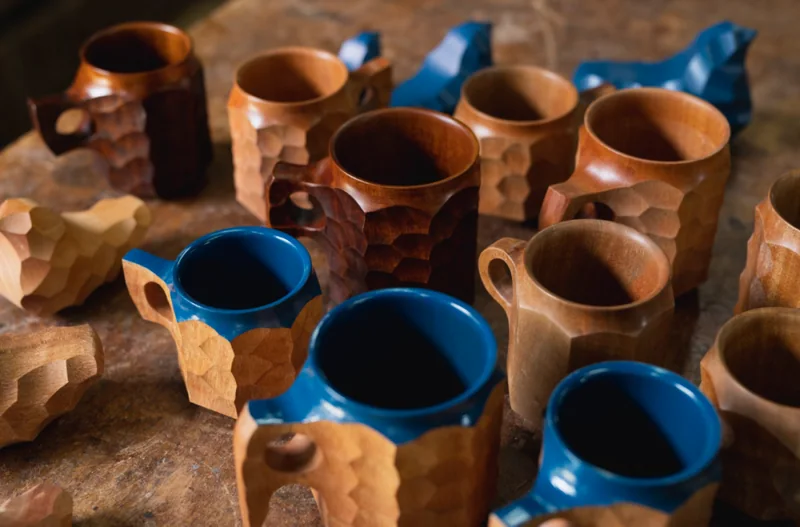
Jin often says a Jincup is only half finished when it leaves the workshop.
The rest belongs to its user. With time and handling, the lacquer brightens and the grain becomes clearer, until it becomes inseparable from someone’s fingerprints and the warmth of their coffee. Entrusting an object’s completion to its user may be why people willingly wait years for it.
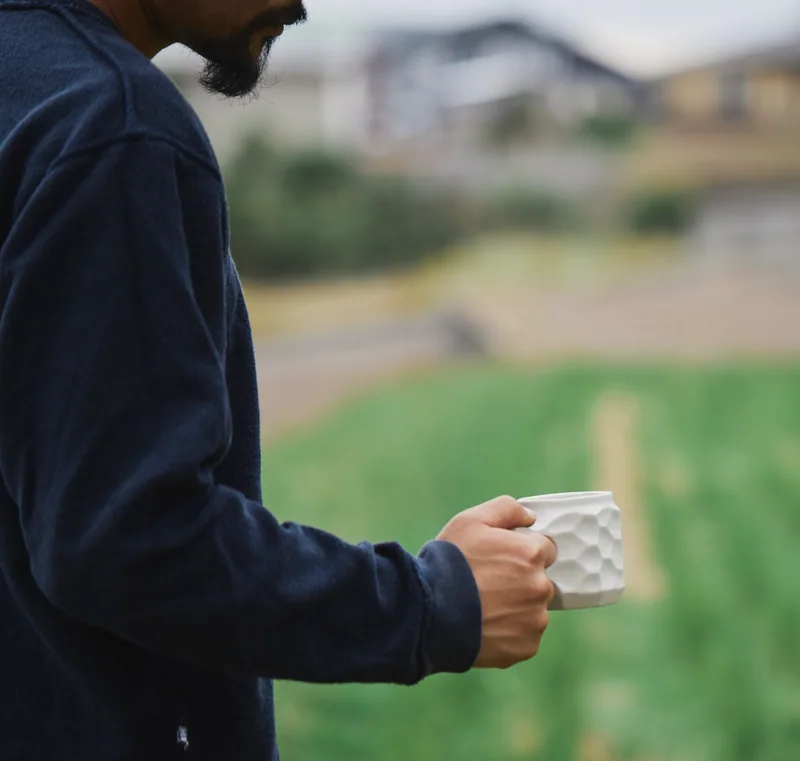
Wasse! Cheers.
“Wasse” is an adverb in the Satsuma dialect of Kagoshima. It corresponds to standard Japanese “totemo” or “sugoku”: very, greatly or especially.
When seeing a wonderful object or drinking excellent coffee, someone in Kagoshima might say “Wasse, yoka!”—“That is really good!”
CHEERS! Project preview from the original publication
↑ Back to contents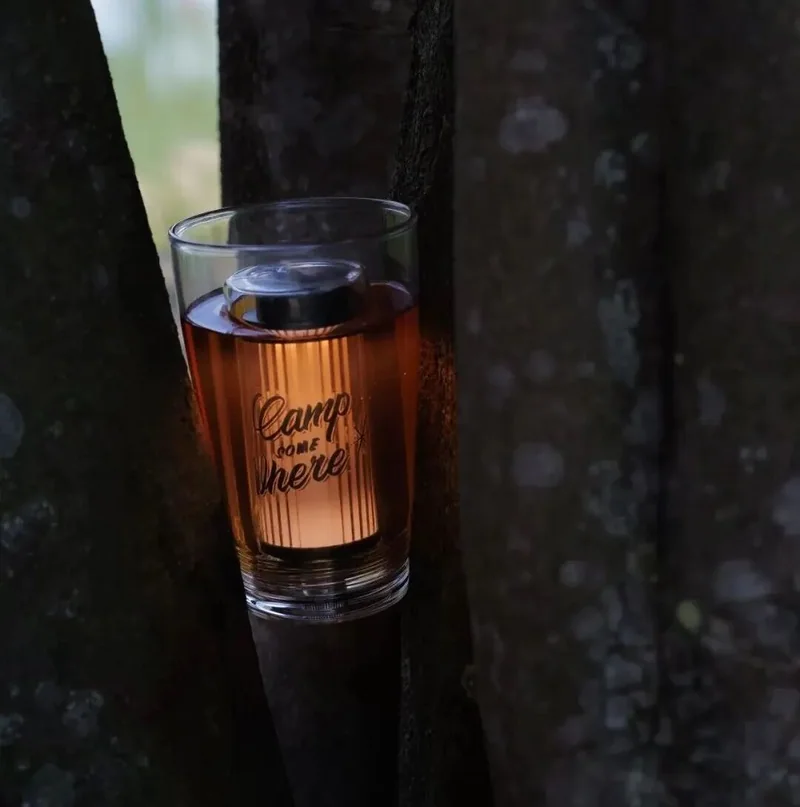
The original CHEERS! programme proposed several ways to explore drinking culture in design-conscious outdoor life:
// Object archives: continuing stories tracing the drinking cultures around jincup, TARPtoTARP, Snow Peak, od.spt and other brands.
// Field Style special: at the exhibition’s tenth-anniversary Tokyo edition—described in the original announcement as Asia’s largest outdoor festival—CSW planned to launch the od.spt × Kirin Kanban × MSQUARE × CAMPsomeWHERE collaboration cups and related products, alongside reporting on drinking culture at the show.
// Exhibitions and sales: CHEERS!-themed presentations were planned for OIDE in Shanghai and other exhibitions, markets and spaces.
CHEERS some WHERE. See you in the next cup.
Editorial references
↑ Back to contents- Original CAMPsomeWHERE WeChat article, 28 April 2026.