
In this story
“The first time I put this tent up, it took two hours.”
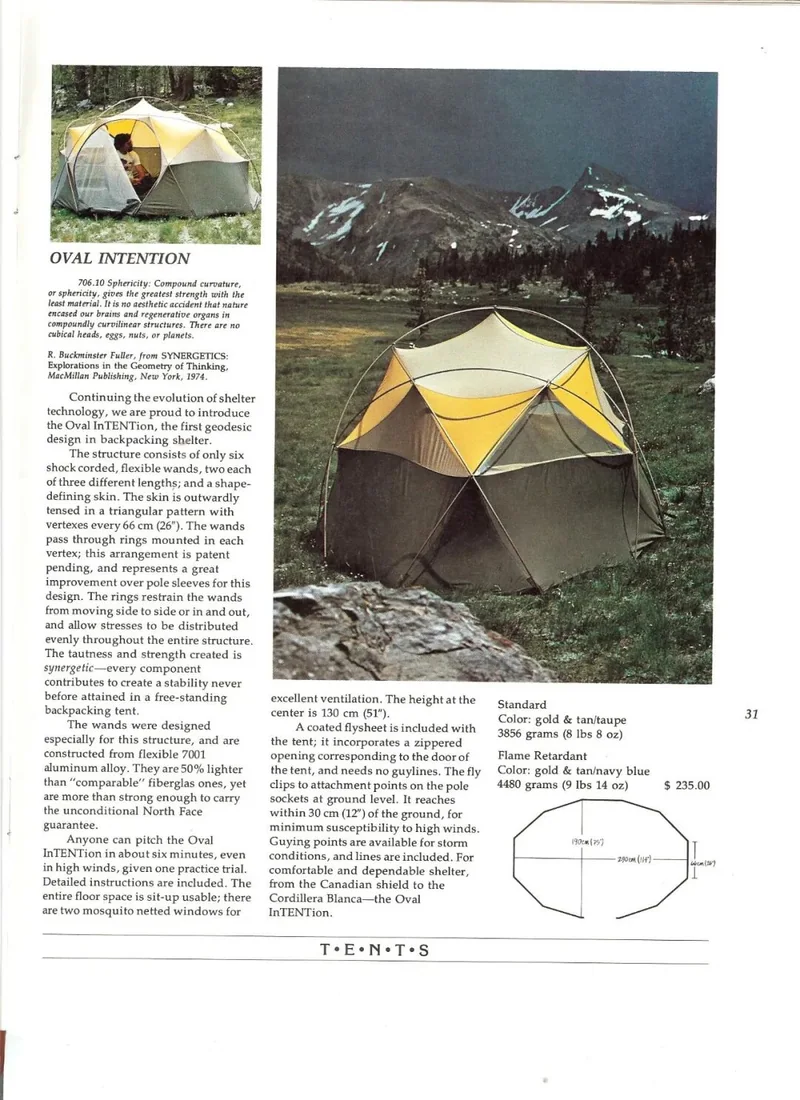
At the CVC vintage-tent gathering in Jiangmen, Guangdong, the previous December, Tim and Sen were talking about the yellow-and-beige Oval Intention in front of them. Silver poles crossed outside its body. With three different pole lengths alone, knowing where to start was not immediately obvious.
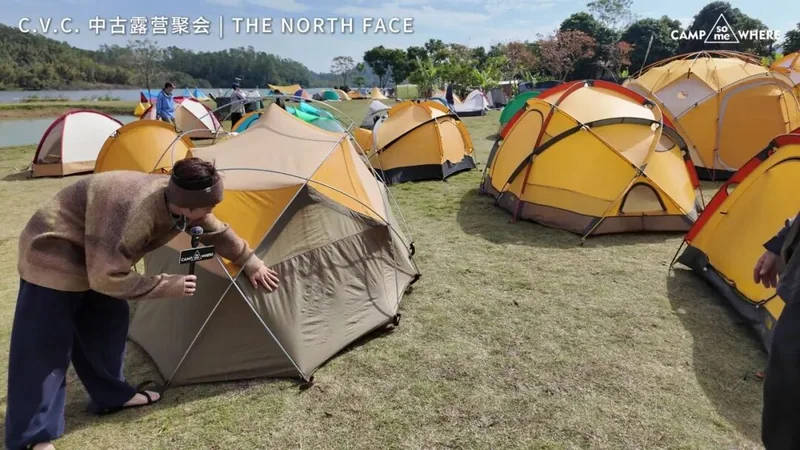
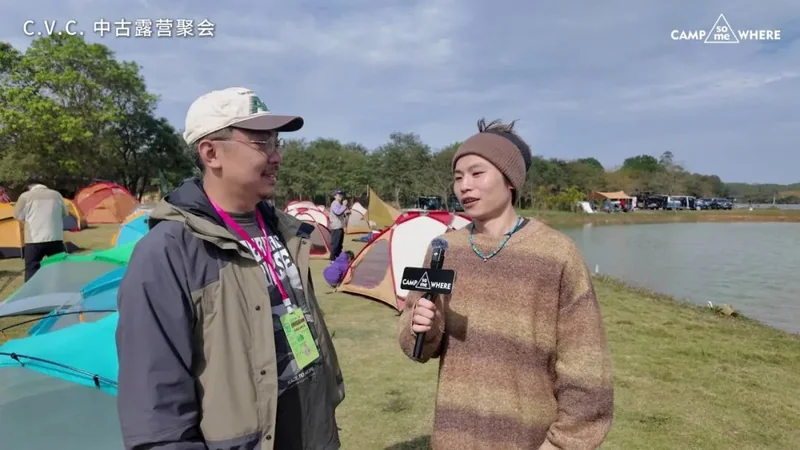
Tim is an experienced camper and hiker and one of the event’s initiators. Sen, known online as “Wuyu de Sen,” organises CVC.
CVC brings people together around vintage camping equipment. Collectors bring old tents, pitch them again, inspect details and exchange assembly methods. Alongside TNF on the grass were Moss, Mountain Hardwear and other brands. Tents usually scattered across old catalogues and private collections became objects people could approach and climb inside.
CAMPsomeWHERE walked with Tim and Sen, listening as they talked. Some openings had been mistaken for air-conditioning ports; some tents were large enough to stand in. What did those crossing poles and unusual holes actually do for the people inside?
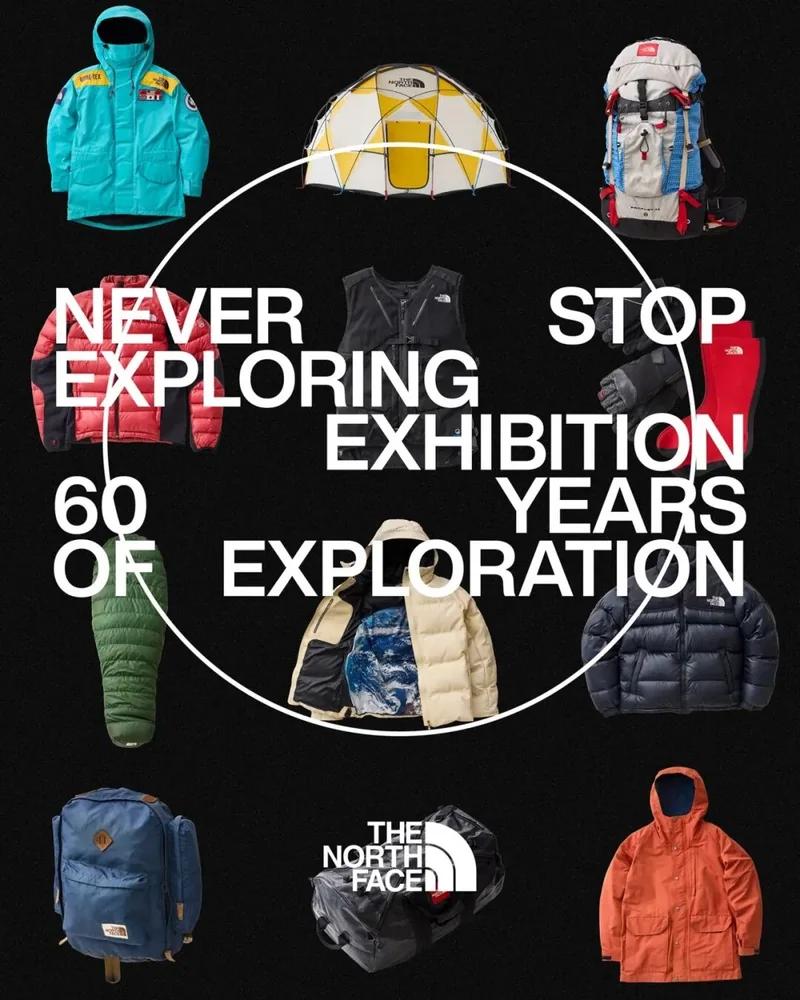
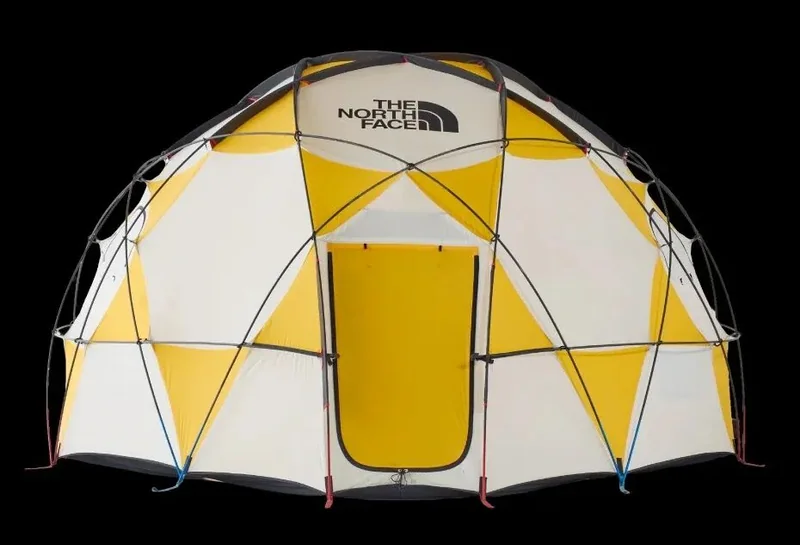
The article coincides with TNF’s sixtieth anniversary. The brand had announced archival products, including dome tents, for an October exhibition in Tokyo. Looking back across those decades, we wanted to start with old tents and their different answers to living outdoors: giving a small tent more usable room, or accommodating weeks and months of life in a larger one. CVC offered a chance to step inside those designs and ask why people still collect and use them.
Is that hole for air conditioning?
↑ Back to contentsBeside a TNF VE-series tent, the conversation turned to a round opening in the fabric. First encounters had prompted guesses: perhaps it was for passing equipment through, or, viewed through today’s campsite habits, for connecting a portable air conditioner.
Place the tent back above the snowline and the position makes more sense. Tim recalled Sen’s explanation: snow can surround the lower body and restrict airflow, while an opening higher up can still ventilate the tent.
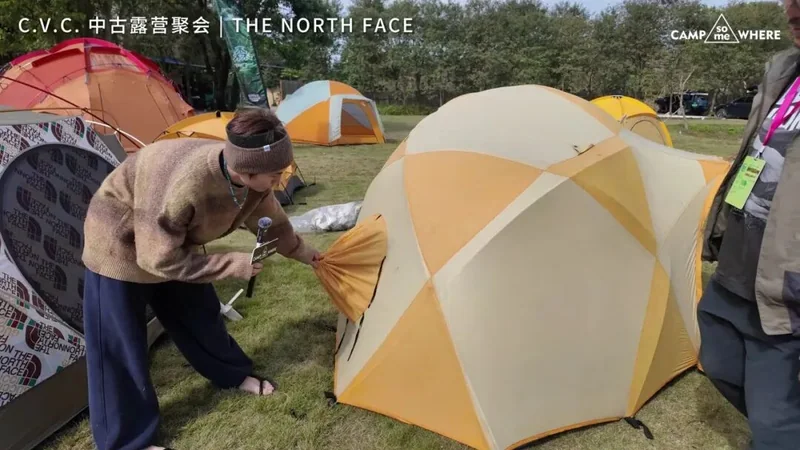
Cold-weather camping also requires ventilation. Breathing, wet clothing and equipment introduce moisture; warm, damp air meeting cold fabric can condense into droplets. A tent may be wet inside in the morning even without rain. Removing that moisture is one of the problems mountaineering shelters must solve.
Once the purpose is clear, other details become visible: the opening’s height, how it closes and whether it is sheltered outside. They also compared large TNF and Mountain Hardwear tents. Both support long stays, yet arrange their entrances, ventilation and frames differently. At a gathering such as CVC, you can finish looking at one tent and walk a few steps to see another maker’s answer.
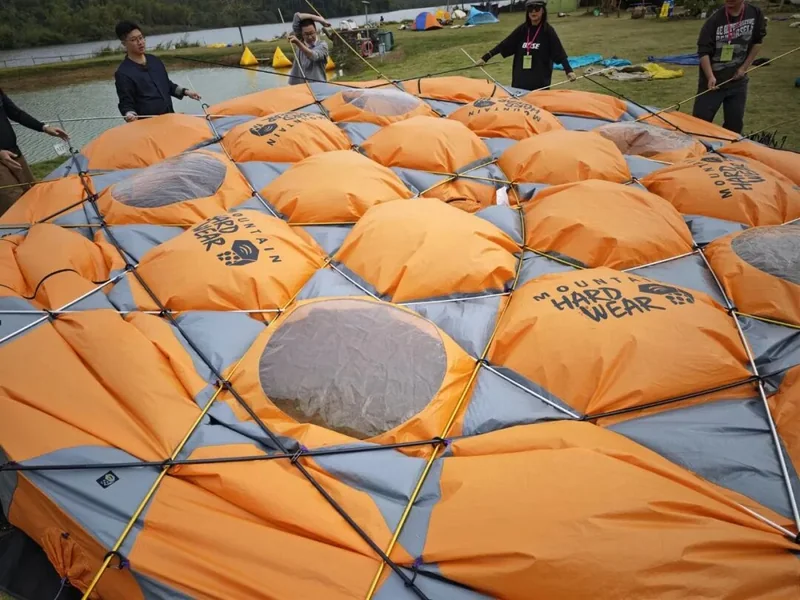
What do all those poles make possible?
↑ Back to contentsConsider a familiar A-frame tent: walls slope towards the ridge, leaving enough floor space for a sleeping mat but less room to sit up. When TNF developed new tent forms in the 1970s, it sought to ease that confinement, allowing people to sit and move as well as lie down.
Key figures included product designer Mark Erickson and manufacturing lead Bruce Hamilton. They faced a contradiction: climbers wanted a light tent in the pack and a spacious one once inside. Hamilton was interested in American designer and inventor Buckminster Fuller’s structural research, so the team looked towards architecture.
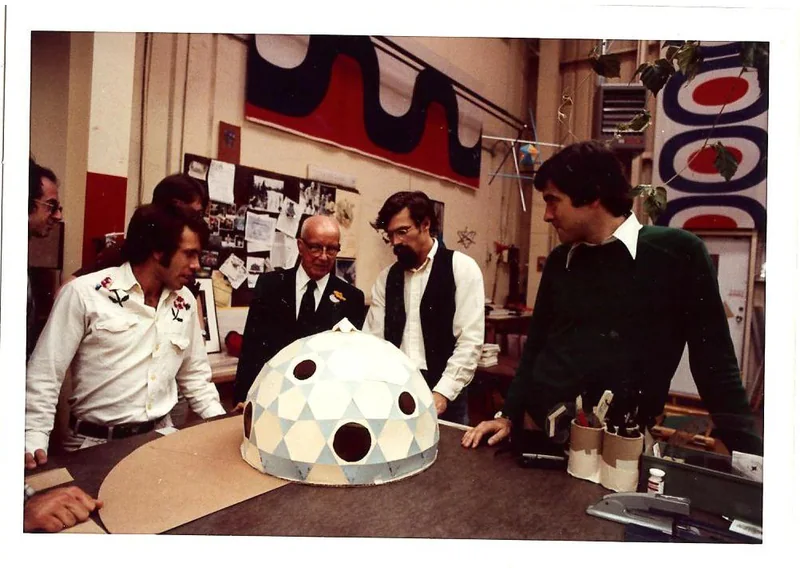
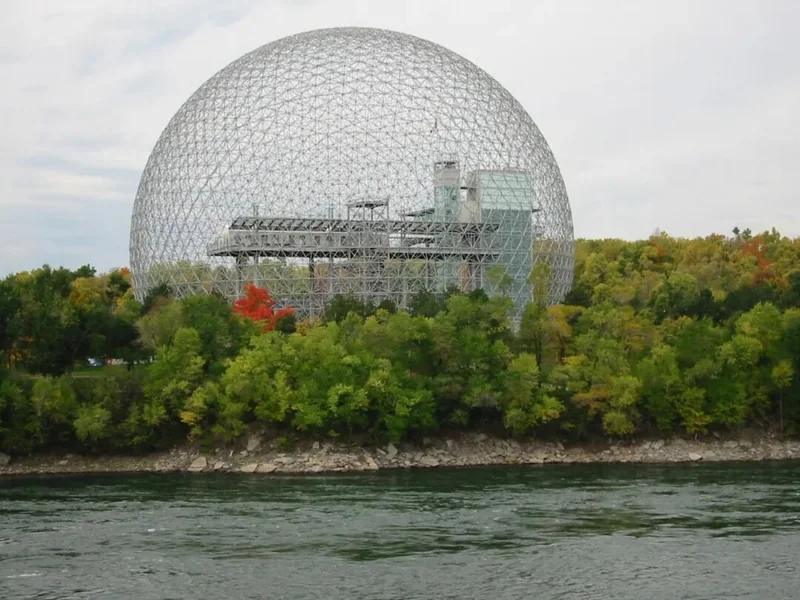
The geodesic domes promoted by Fuller link short struts into triangles to form a near-spherical shell without filling the interior with supports. The attraction for tent designers was clear: put the support in the skin and leave the centre for people. Architectural connections, however, had to become portable equipment that could be repeatedly erected and packed away.
An independent inventor studying lightweight shelters, Bob Gillis, then arrived. In Erickson’s recollection, Gillis drove to the company in an old Volkswagen van with his wife and baby in the early 1970s. He demonstrated fabric fitted with bent-nail rings, threaded flexible poles through them, and flexed the assembly into an arch. He subsequently joined the tent’s development.
That connection system appeared in early Oval Intention tents. Poles passed through and crossed at rings on the fabric; the short linked struts of architecture became long flexible poles. TNF’s autumn 1975 catalogue featured the yellow-and-beige tent: six curved aluminium poles created an oval body without a central upright, opening up the walls and interior.
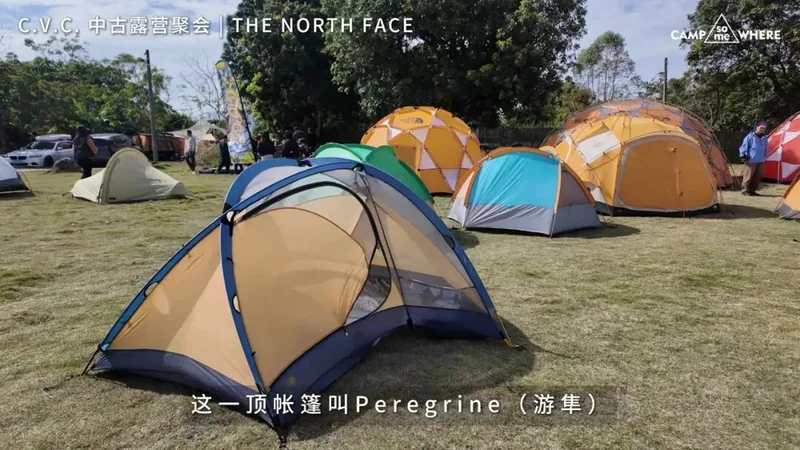
Another TNF tent at CVC was the Peregrine, named after the falcon. Blue pole sleeves and pale yellow fabric rose at both ends like a small spacecraft resting on the lawn. Its compact space had distinct uses: a central resting area, storage for packs at the rear and a window on each side.
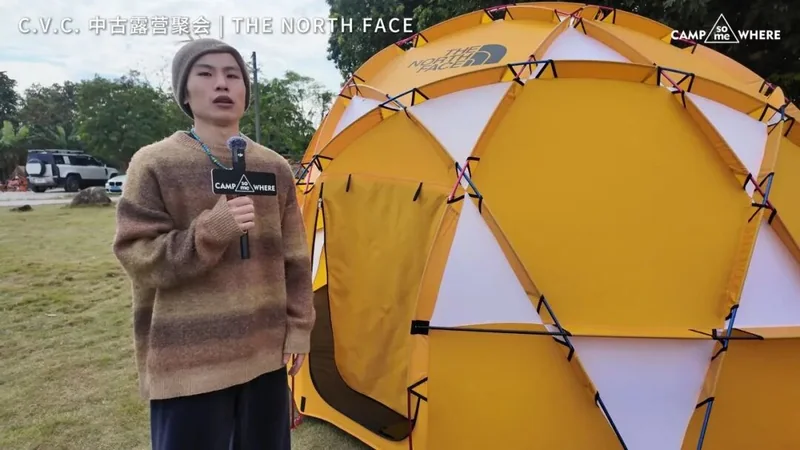
For a team staying at a mountain camp for weeks, a tent must provide more than sleeping positions. TNF’s 2-Meter Dome base-camp tent offered standing room. The version described by the brand in 2017 was over two metres high and accommodated eight people. Climber Cedar Wright used one for two months in the Himalayas, treating it as a studio as well as a living room and bedroom.
What else do collectors notice?
↑ Back to contentsFor Tim and Sen, collecting old tents also means comparing different equipment. Beside the VE series, fabric and pole colours led them to backpacks: after collecting enough pieces, they noticed similar blues elsewhere. Relationships invisible in a single tent gradually emerged across a collection.
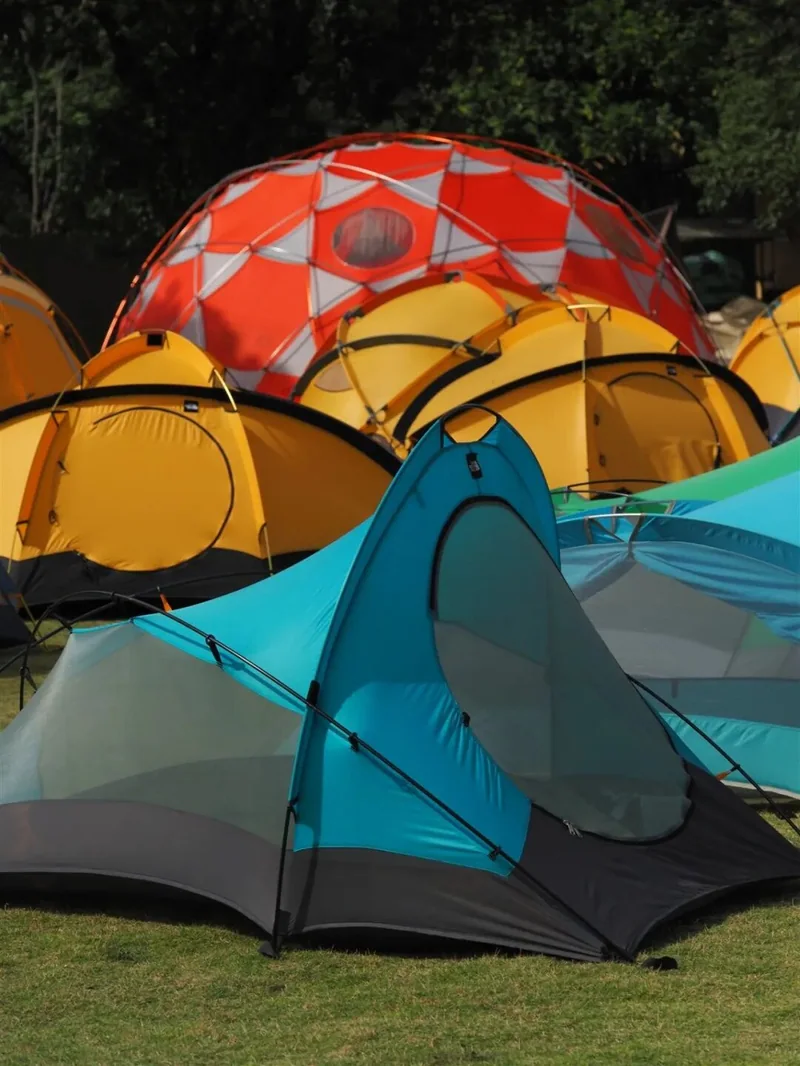
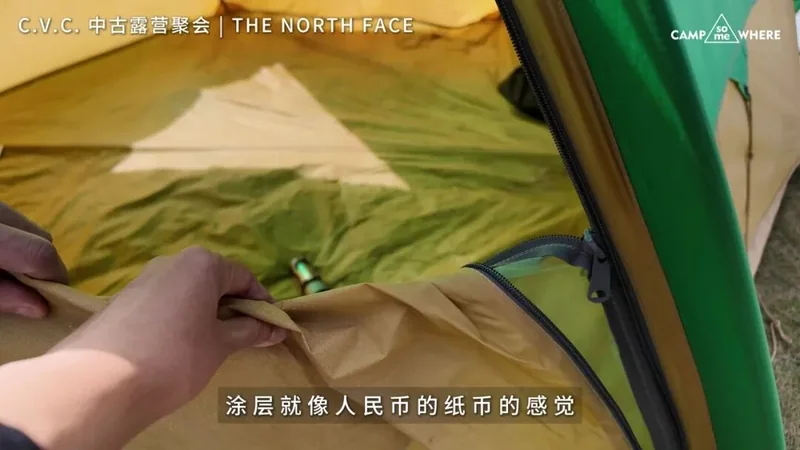
Touching the objects adds another dimension. The Peregrine’s fabric felt smooth; the old VE reminded them of Chinese banknotes. Small leather components also survived on old tents. Catalogue photographs cannot convey those sensations very precisely.
Who kept these tents alive?
↑ Back to contentsAn object’s survival does not guarantee complete documentation. After several owners, a tent may have lost its catalogue and pitching instructions. Alongside asking experienced collectors, paper records can help explain how it looked and worked originally.
OutInUnder is one place to begin. The website records outdoor-industry history, including recollections from early TNF employees and old catalogues. Its accounts supplied the story of Gillis’s demonstration and involvement in Oval Intention.
Another is Utah State University’s Outdoor Recreation Archive, or ORA, which holds catalogues, documents, photographs and audiovisual material from many outdoor brands. Online collection listings and catalogue covers show which brands and years are represented. Not all complete interiors are available online; readers seeking further material can ask the archive about paid scanning.
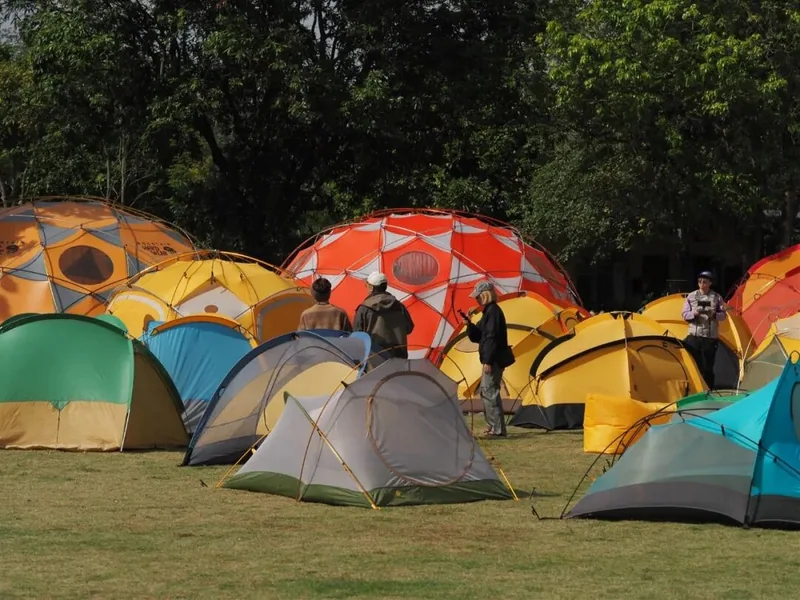
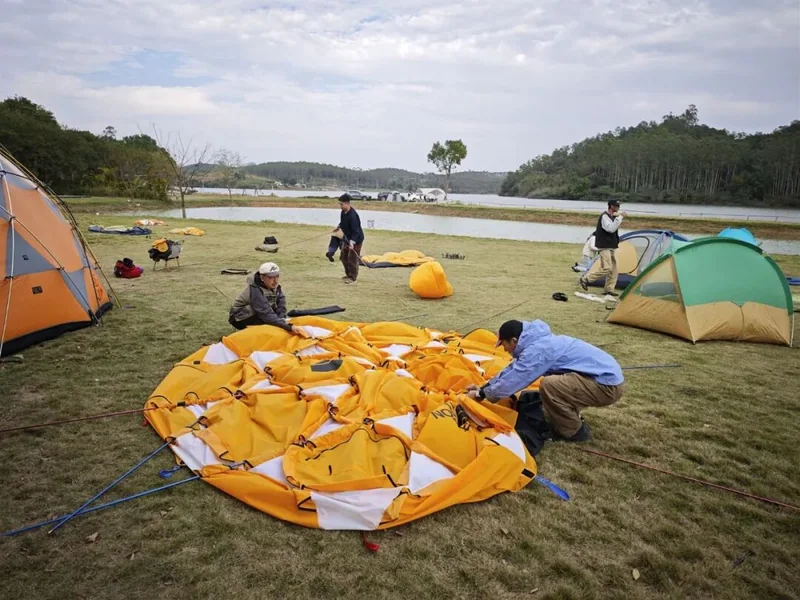
OutInUnder offers online records and ORA preserves documents. At CVC, collectors put the tents from those catalogues back on the grass, with people on hand to explain pole sequences and pitching tricks.
One participant recalled watching a Japanese collector’s YouTube video documenting an old TNF tent from arrival through threading every pole, almost like a film. Its shape stayed in his memory until CVC, where he saw the same model in person for the first time. One collector’s assembly record had become another person’s introduction.
Surviving tents also vary in condition. In response to the idea that old tents are mouldy or smelly, someone offered a practical reminder: “Every tent has its own condition.” If seeing one makes you want to buy, look beyond its appearance and understand what you would be taking on.
Before buying a vintage tent, check three things
↑ Back to contentsSee it fully pitched and check its parts. Ask whether the inner, fly, poles and connectors are complete and what has been replaced or repaired. Request close views of the fly’s underside, floor, zips and pole joints. Display and overnight use demand different levels of condition.
Distinguish cleaning from restoration. Sticky or peeling coatings are not merely dirt. Surface cleaning, seam repair and coating restoration are different jobs. Before buying, clarify what can be treated, the availability of parts and likely maintenance costs.
Plan where to dry it before deciding where to store it. After use or cleaning, dry the tent thoroughly and keep it somewhere cool and dry, packed loosely for long-term storage. Limit prolonged sun exposure and avoid machine washing or tumble drying. After packing up in rain, spread it out again at home rather than leaving it wet in its bag.
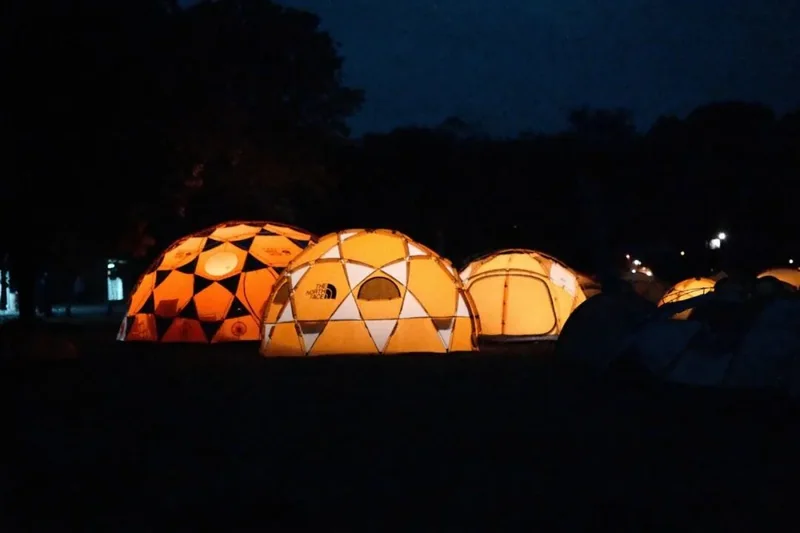
These tents reveal how TNF addressed concrete problems of outdoor living. Walls needed to open out so people could sit more comfortably; vents needed considered positions to work when snow surrounded the base. Shapes that now make us stop and look were once answers to practical difficulties.
At CVC, those decisions become conversations again. Someone preserves the object, someone remembers the assembly, someone films the process. Thanks to these informal keepers of outdoor history, looking back over TNF’s sixty years can still mean entering an old tent and seeing how much room its designers made for the people inside.
Also screening
↑ Back to contentsCVC: A guide to TNF vintage tents (Chinese)
P.S. Another participant’s long-awaited CVC vintage-tent account was also on its way at the time of publication. Stay tuned.
Image permissions
↑ Back to contentsThe Biosphère photograph is credited to Cédric THÉVENET, from the original Wikimedia Commons file, under CC BY-SA 3.0. This site produces only resized and format-converted versions.

The photograph of Fuller’s visit comes from OutInUnder: Ingrid’s historical photographs, retaining the original credit. That archive page uses CC BY-SA 3.0; this site produces only resized and format-converted versions.
Editorial references
↑ Back to contentsThe following sources were used to check historical and public information. They do not replace the on-site interviews or the author’s observations.